Poseidon Roofing & Waterproofing
  • Services
    • Commercial & Industrial Roofing
    • Roof Repair
    • Waterproofing
    • Emergency Roof Repair
  • Roof Systems
    • Commercial Flat Roofs
    • Shingle
    • Metal
    • Clay Tile
    • Concrete Tile
    • Cedar Shake
  • Areas We Serve
    • Orlando
    • Fort Lauderdale
    • Tampa
    • Fort Myers
  • Industries
    • Hospitality
    • Warehousing & Distribution
    • Medical Buildings
  • About Us
    • Projects
    • Partners
    • Careers
    • Blog
  • Contact
  • Menu Menu

A Pre-Season Storm Damage Roof Inspection Checklist for Florida Commercial Properties

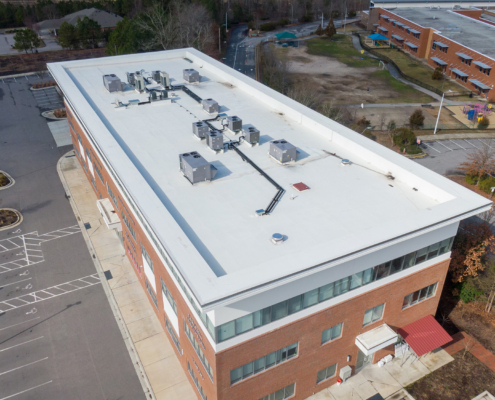
June 1 arrives the same way every year. What doesn’t arrive on a schedule is the vulnerability already sitting on your roof — the worn flashing at the equipment curb, the slowing drain, the seam that’s been lifting since last fall. A storm damage roof inspection completed before hurricane season begins doesn’t just identify what’s wrong; it creates a documented record of conditions that matters as much in an insurance adjuster’s office as it does on the roof itself. Zone by zone, here’s what a complete pre-season assessment covers and why it’s worth completing before the season opens.

Why Florida Commercial Roofs Face Outsized Wind and Storm Risk

Not all commercial buildings face hurricane season the same way. Florida’s combination of coastal exposure, aging flat roof infrastructure, and strict wind uplift code requirements creates a specific risk profile that national roofing content rarely addresses at the level of detail commercial property managers here actually need.

The Vulnerability of Flat Roofs in Wind Events

Flat commercial roofing systems resist hurricane conditions differently than sloped residential structures. Rather than shedding wind, a flat membrane must resist the uplift and suction forces that move across an open surface at speed. At penetrations, seams, and perimeter flashings — the natural weak points in any commercial roof — wind-driven rain finds entry well before structural damage occurs. On buildings with parapet walls or elevated architectural features, wind load concentrations at transitions can exceed what an aging system was designed to handle, even at sub-Category 1 wind speeds. Understanding where wind damage to roof systems originates is what makes a pre-season inspection a prevention tool rather than a formality.

Florida’s Wind Uplift Code Requirements

Florida building codes impose specific wind uplift resistance requirements based on geographic zone, building height, and roof configuration. Systems installed under older code versions may not meet current wind resistance standards, a gap that creates real liability exposure during a major storm. Knowing whether your roofing system’s installation method and fastener pattern satisfy current code is exactly the kind of finding a professional storm damage roof inspection produces — and exactly the kind of finding that changes a post-storm insurance conversation before it starts.

Your Pre-Season Commercial Roof Inspection Checklist

A complete pre-season inspection isn’t a single pass across the roof surface. It moves through distinct zones, each with its own failure modes and its own stakes in a storm event. Here’s what each zone requires.

Membrane Surface and Field Conditions

The membrane field is where visible degradation is easiest to spot: blistering, surface erosion, coating loss, and stress cracking around high-traffic zones. Flag any membrane lift at laps and seams — wind gets under lifted seams before anything else fails. Surface blistering often indicates trapped moisture beneath the membrane, which compounds under thermal loading during storm conditions. Any previous repairs that appear inadequate or out of compliance with the original system should be documented and evaluated before the season opens. [Link: related blog post on commercial flat roof system types when available]

Penetrations, Flashings, and Counterflashings

Penetrations — HVAC curbs, pipe boots, conduit entries, and skylights — are among the most common origin points for commercial roof storm damage. Each requires a properly sealed flashing that moves with thermal expansion without opening a gap. Flashings at parapet walls and counterflashings at vertical transitions deserve particular attention: when wind-driven rain reaches these points at sustained speed, any deficiency in the seal becomes an active entry point. Note any flashing that has lifted, separated at the substrate, or shows visible sealant failure around the termination edge.

Drainage Systems — The Most Overlooked Pre-Storm Item

Roof drain and scupper condition is the most consistently missed item in a pre-season inspection and among the most consequential. A clogged or restricted drain turns a heavy rainfall event into a structural loading problem: standing water on a flat commercial roof during a storm adds weight the system was never designed to carry. Clear all debris from drains and scuppers, confirm drain caps are secure and properly sized, and verify that slope conditions direct water toward drainage points rather than toward low areas where ponding accumulates.

What You Can Check vs. What Requires a Professional

Not every item on a pre-season checklist requires a contractor. Knowing where the boundary is helps property managers prioritize their own walk-throughs and understand what a professional storm damage roof inspection adds that a visual check alone can’t produce.

Inspection Area
Visual Check
Professional Assessment
Membrane surface Spot blistering, cracking, discoloration Probe for trapped moisture, measure coating loss
Drain and scupper condition Clear debris, check cap condition Verify slope and drainage
Flashing condition Flag lifted or separated sections Evaluated adhesion, test perimeter pull strength
Wind uplift compliance Review original installation records lat against current Florida code requirements
Seam integrity Note visible lifts or open laps Probe seams verify full adhesion throughout

Roof wind damage almost always starts at the points a visual walk misses. Poseidon’s waterproofing and liquid-applied systems are engineered specifically for Florida’s wind and rain conditions, backed by manufacturer certifications on every installation.

Explore Our Waterproofing Solutions

The Insurance Documentation Angle Most Property Managers Overlook

A pre-season storm damage roof inspection produces something most property managers don’t think about until they need it: a professional condition record dated before the event.

Why Pre-Storm Documentation Changes Post-Storm Outcomes

When a commercial property files a hurricane roof damage claim, one of the first questions an insurance adjuster asks is whether the damage existed before the storm or was caused by it. Without a pre-storm inspection report, that question becomes harder to answer in the property owner’s favor. A documented storm damage roof inspection completed in March or April — with zone-by-zone photographs, professional findings, and a clear description of pre-storm system conditions — gives the property owner’s claim a factual foundation that simplifies the adjustment process materially. For portfolio operators managing multiple commercial properties, a consistent documentation package across every asset becomes a genuine financial protection tool.

Schedule Before the Window Closes

The April and May pre-season inspection window exists for a straightforward reason: certified commercial and industrial roofing contractors in Florida fill their available capacity well before June 1.

The Contractor Availability Reality

Quality contractors who can conduct a code-knowledgeable, documented roof wind damage assessment aren’t uniformly available once storm season begins. By late May, pre-season scheduling at reputable firms is largely committed. Property managers who book in March or April have access to their preferred contractor, their preferred timeline, and — critically — the time to address findings before the season opens. Waiting until a storm is in the forecast means waiting too long to repair a lifted flashing, clear a restricted drain, or address a wind uplift deficiency. The pre-season window is the only window that makes prevention possible.

What Poseidon Has Learned From Complex Florida Conditions

At the Hilton Grand Vacation Club in Orlando, Poseidon addressed 8-story structures with 10-foot mansard walls — high wind-exposure conditions that made conventional roofing methods both impractical and cost-prohibitive. The solution was a liquid-applied membrane system delivering a 25-year manufacturer’s warranty at approximately 20% below the cost of a conventional approach. The same judgment that shaped that project applies to every pre-season commercial roof storm damage assessment: identifying not just what’s wrong, but what the right solution actually is given the building’s specific conditions and exposure.

The Inspection That Earns Its Value Before the Storm Does

A storm damage roof inspection completed before June 1 gives property managers a documented baseline, a prioritized finding set, and the time to address vulnerabilities while scheduling is still flexible. Poseidon works with commercial client-partners across Orlando, Fort Lauderdale, Tampa, and Fort Myers as a consultative roofing resource — before the season and through it — with the manufacturer certifications and hands-on experience that complex Florida conditions require. Reach out to schedule your pre-season assessment.

Share This Post

  • Share on Facebook
  • Share on X
  • Share on WhatsApp
  • Share on Pinterest
  • Share on LinkedIn
  • Share on Tumblr
  • Share on Vk
  • Share on Reddit
  • Share by Mail

More Like This

Drone Photos Of Tpo Commercial & Residential Roofing Building

40- Year Recertification in Florida: What Condo and Commercial Property Owners Need to Know About Their Roof

Commercial Roofing, Contractor Credibility
https://www.poseidonsales.com/wp-content/uploads/2025/05/Drone-Photos-of-TPO-Commercial-Residential-Roofing-Building.jpg 1250 2000 Abstrakt Marketing /wp-content/uploads/2025/05/Poseidon-Logo.jpg Abstrakt Marketing2026-07-13 15:27:532026-07-13 15:28:0140- Year Recertification in Florida: What Condo and Commercial Property Owners Need to Know About Their Roof

Categories

  • Commercial Roofing
  • Contractor Credibility
  • Roof Repair
  • Roof Systems
Poseidon Logo

Our Roof Types

Commercial Flat Roofs

Shingle

Metal

Clay Tile

Concrete Tile

Cedar Shake

What We Do

Commercial and Industrial Roofing

Roof Repair

Waterproofing

Emergency Roof Repair

Contact Us

3471 High Ridge Road
Boynton Beach, FL 33426

202-831-3200

[email protected]

Website by Abstrakt Marketing Group ©
  • Privacy Policy
  • Sitemap
Scroll to top Scroll to top Scroll to top

This site uses cookies. By continuing to browse the site, you are agreeing to our use of cookies.

AcceptLearn more

Cookie and Privacy Settings


How we use cookies

We may request cookies to be set on your device. We use cookies to let us know when you visit our websites, how you interact with us, to enrich your user experience, and to customize your relationship with our website.

Click on the different category headings to find out more. You can also change some of your preferences. Note that blocking some types of cookies may impact your experience on our websites and the services we are able to offer.

Essential Website Cookies

These cookies are strictly necessary to provide you with services available through our website and to use some of its features.

Because these cookies are strictly necessary to deliver the website, refusing them will have impact how our site functions. You always can block or delete cookies by changing your browser settings and force blocking all cookies on this website. But this will always prompt you to accept/refuse cookies when revisiting our site.

We fully respect if you want to refuse cookies but to avoid asking you again and again kindly allow us to store a cookie for that. You are free to opt out any time or opt in for other cookies to get a better experience. If you refuse cookies we will remove all set cookies in our domain.

We provide you with a list of stored cookies on your computer in our domain so you can check what we stored. Due to security reasons we are not able to show or modify cookies from other domains. You can check these in your browser security settings.

Other external services

We also use different external services like Google Webfonts, Google Maps, and external Video providers. Since these providers may collect personal data like your IP address we allow you to block them here. Please be aware that this might heavily reduce the functionality and appearance of our site. Changes will take effect once you reload the page.

Google Webfont Settings:

Google Map Settings:

Google reCaptcha Settings:

Vimeo and Youtube video embeds:

Accept settingsHide notification only